

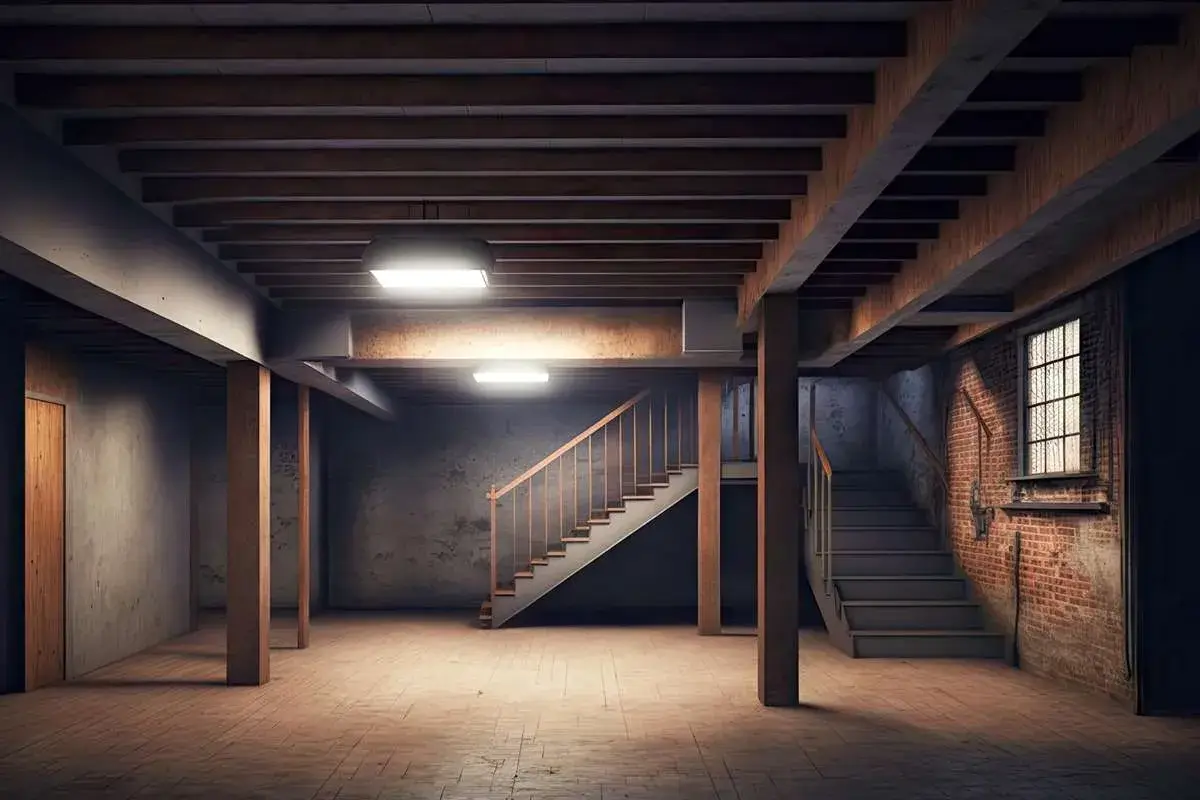
Imagine your basement has tiny cracks and gaps, like little invisible doorways letting radon gas sneak inside. Radon is a harmful gas you can’t see or smell and can build up in your home. So, if you seal up those cracks, will it stop radon?
The answer: It helps, but it’s usually not enough.
Sealing your basement can block some of radon’s entry points, which may slightly lower the levels. But radon is sneaky; it can still be found in other ways. Most homes need a radon mitigation system (like a special vent fan) and sealing for the best protection.
Radon: What is it and Why Should You Care
Radon is a radioactive gas that is a product of the decomposition of underground uranium. It may leak into the houses through the basement cracks and holes. The EPA refers to it as the second biggest cause of lung cancer in the U.S., next to smoking.
Sealing is a very appealing measure as an initial defense against radon.
Sealing Basement: The Basics
Sealing a basement involves filling cracks in floors, walls, sump pits, pipe gaps, and other areas. Consider sealing those entries through which radon gets into the house.
This technique is often part of a radon sealing basement strategy. But can it stand up on its own?
The Mixed Results of Real-World Data
An American study reported that sealing alone is not very effective in controlling radon. It appears that mere sealing of cracks did not reduce radon levels significantly.
A vice versa Austrian study demonstrated that a combined approach, consisting of the basement sealing and active ventilation (“sub-slab depressurization”), reduced the radon to 500 Bq/m 3/m³ indoors, reducing the radon by 99%.
The World Health Organization also says that the amount of radiation can be decreased by 90-98% by active ventilation systems.
Sealing is estimated to be between 50% (or even less) effective, and it is not reliable in summer.
Why Sealing the Basement Helps, but Isn’t Enough
Sealing the basement without addressing the pressure that draws radon inside is like plugging holes in a sinking boat while ignoring the hole at the bottom. Of course, you retard the leak. But the water, or the radon, will go somewhere else.
Benefits of Sealing
- Closes open entry points.
- Enhances the performance of active systems.
- Minimizes heat loss and drafts.
Limitations
- The cracks are often hard to locate and seal.
- Gaps may be reopened by settlement and structural alteration.
- Separately, sealing will only provide a minor and sometimes short-lived improvement.
Real Homeowners Reports
On Reddit, homeowners share their experiences:
“Sealing didn’t live up to its promise.”
Another says:
“Sealing it alone will not have any effect on the radon level… sealing will allow a sub-slab depressurization system to effectively mitigate soil gases.”
Evidence suggests sealing can make active systems perform better, but it is not a panacea.
The Importance of Pre-testing and Post-testing after Sealing the Basement
Before you jump into sealing basement cracks or installing ventilation systems, it’s essential to test your home’s radon levels. Baseline can be established with the help of a simple short-term test kit. After sealing or mitigation has been done, a follow-up test is carried out to check whether improvements that were effected have made a change.
The EPA states that the level of radon that requires a correction is normally 4.0 pCi/L or more. Homes with slightly lower levels should consider mitigation regarding safety.
In addition, the levels of radon also fluctuate with the seasons. Hence, inter-monthly testing or long-term testing is a better representation of your home’s radon levels. The results can be interpreted with the help of a professional inspector who can recommend the best course of action.
Best Radon Control Strategy: Seal+Ventilate
Agencies and experts agree:
- Seal cracks and the large openings (pipes, sump pit, floor-wall joints, block-voids).
- Install active soil pressure relief (by the use of a vent pipe and fan).
- Use barrier membranes under slab new build-ups.
- Ensure correct ventilation using heat-recovering systems.
These measures combine to lower the radon level significantly.
Secrets to Lowering Radon in 5 Quick Steps
- Test your home, using an EPA-recognized kit on a continuous monitor in the basement.
- Plug up apparent openings such as floor-wall perimeter, entry points of pipes, block wall voids, and sump holes.
- Re-test the level of radon.
- If it is still high ( >4 pCi/L), install active soil depressurization (vent + fan).
- Monitor the fan, reseal on a regular basis, and retest once every 2 years.
Final Takeaways
- Yes, sealing the basement helps, but it’s just one piece of the puzzle.
- No, you cannot depend on sealing alone to lower radon to satisfactory levels.
Indeed, sealing is necessary and effective when combined with active depressurization and effective ventilation. Sealing is the engine that drives the radon out. Think of it as preparing the foundation, and maintaining and developing systems that ventilate it.
Conclusion
So, does sealing the basement reduce radon? Yes, but not in sufficient amounts. To actually protect in a long-lasting manner, you require a complete mitigation system.
Our company, Elite Inspections, focuses on full radon solutions. First, we do a thorough basement seal-up, fill cracks, close entry holes, and prepare your foundation. Next, we install and test a reliable active soil depressurization system to fit your home.
Ensure the good health of your family. Fight against radon by ordering a free quote now. Ask Elite Inspections to conduct a radon risk assessment and make a plan of specific actions to eliminate it.


