

You just signed away thirty years of your life for a mortgage on a home that looks like a dream. You even had a guy with a clipboard walk through it for three hours and give it a thumbs up.
Then you move in and realize the wall behind your bed is actually a sponge full of stagnant water. The seller painted over the stain to conceal it. You just bought a $20,000 repair bill.
This happens way more than people think. Visual checks cannot see through solid objects. This is where the debate of infrared scans vs traditional inspections really starts to matter.
According to the U.S. Department of Energy, thermal imaging can detect heat loss and air leakage that the naked eye misses completely.
If you only rely on what an inspector can see with a flashlight, you are leaving a lot to chance. You might be ignoring a ticking time bomb behind the paint.
Infrared Scans vs Traditional Inspections: What Is the Difference
A traditional inspection is like a physical exam at the doctor’s. The inspector uses their eyes, ears, and hands to assess the home’s health.
They look for cracks in the foundation and test the light switches. They check if the AC blows cold and if the toilets flush. It is a vital part of the process, but it has limits.
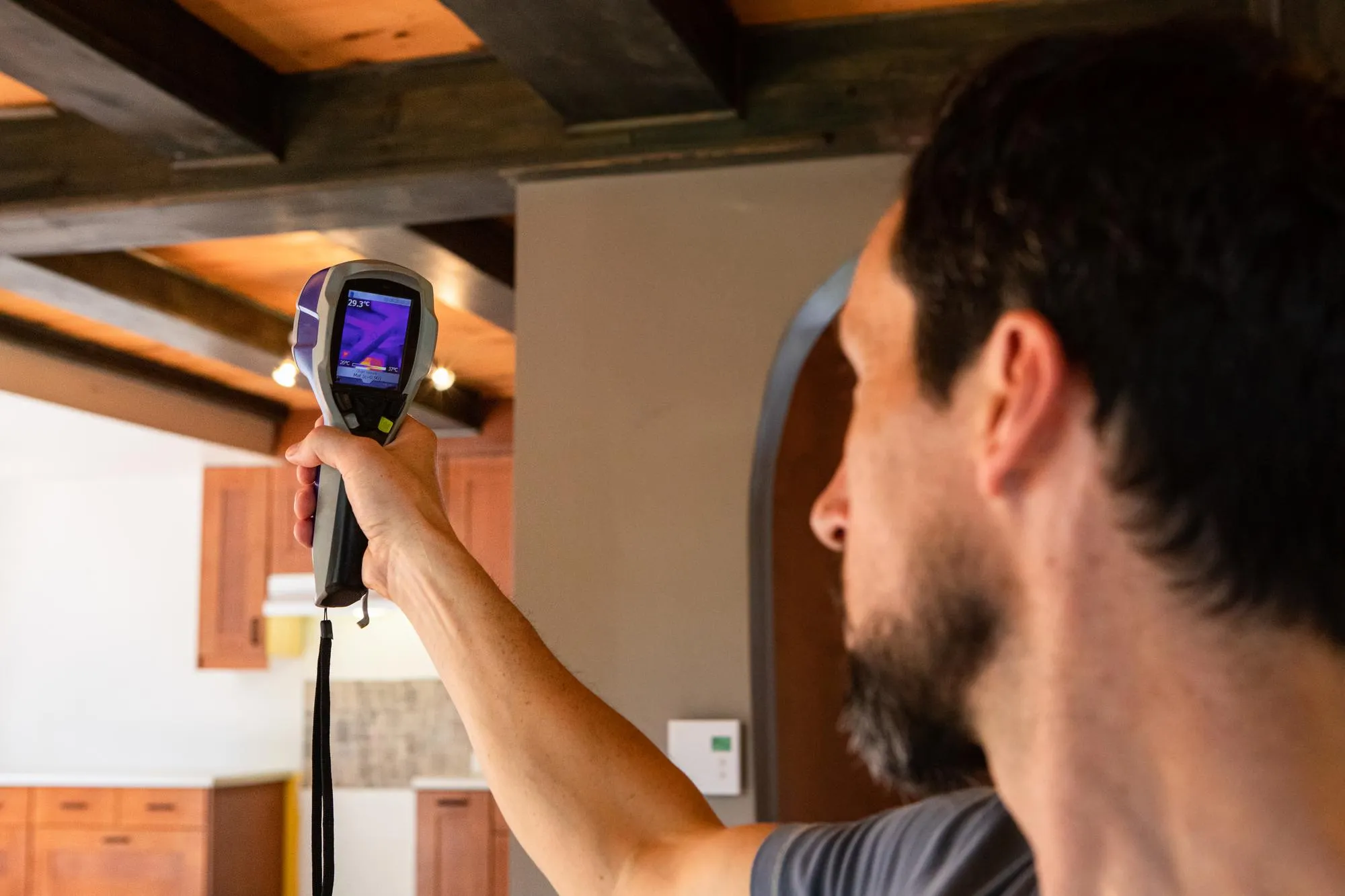
Thermal imaging inspections go a step further. This technology uses a special camera that detects heat rather than light. It creates a map of the temperatures inside your walls. Cold spots might indicate water leakage, while hot spots often point to electrical issues.
Think of it like an X-ray for your house. You wouldn’t want a surgeon to operate without an X-ray or an MRI. Buying a house should be no different.
Here is the thing. A wall can look perfectly dry on the outside while a pipe is dripping slowly on the inside. By the time you see a water stain, the damage is already done.
Why Thermal Imaging Inspections Save You Money
You might wonder if the extra tech is worth the cost. It usually pays for itself during the first major discovery.
Thermal imaging inspections can find missing insulation in the attic. This might seem small, but it leads to massive energy bills every month. More importantly, it can find “hot spots” in your breaker panel. Overloaded circuits or loose wires generate heat before they ever cause a fire.
The Federal Management Agency (FEMA) notes that electrical malfunctions are a leading cause of home fires. You can read their safety data on electrical fire prevention.
Finding a loose wire with a camera is much cheaper than calling the fire department later. It gives you a chance to fix the problem for a few hundred dollars.
Real World Lessons from the Front Lines
Here is a real-life story about the importance of thermal scanning. While not related to homes or home inspection, it shows the practical applications of this useful technology and how it is helping humanity.
In Danbury, Connecticut, emergency responders used thermal-imaging cameras during the search for a crash victim after a vehicle hit a tree. With darkness and dense brush, firefighters used thermal imaging to quickly locate an injured driver about 700 feet from the crash site by spotting a heat signature that stood out in the cold weather.
Emergency crews credited the thermal imaging search with helping locate the victim quickly, likely preventing a worse outcome.
Many people think that if a house is new, they do not need advanced tech. This is a dangerous assumption to make. New construction can actually have more hidden issues than older homes. Workers might forget to put insulation in one corner of the house.
A roofer might accidentally nick a pipe with a nail. That small leak won’t show up for months, but a thermal camera will catch it on day one.
When you compare infrared scans vs. traditional inspections, you have to look at the risk. An older home might have settled, creating gaps in the walls. These gaps let pests and cold air in. A traditional inspector might see a mouse hole, but they won’t see the air leak behind the siding.
What an Infrared Camera Actually Shows
When you look at the screen of a thermal camera, you see a world of colors. Purple and blue usually mean cold, while orange and red mean hot.
An inspector looks for patterns that do not make sense. If there is a blue streak running down a warm wall, that is a huge red flag. It usually means there is liquid trapped back there. Water holds temperature differently than wood or drywall.
- It can detect roof leaks that haven’t yet reached the ceiling.
- It finds gaps in window seals that are wasting your heat.
- It identifies overheating motors in your HVAC system.
- It reveals where pests have cleared out insulation to build nests.
This level of detail is impossible to get with a standard flashlight and a ladder. It provides a layer of certainty, helping you sleep better at night.
Making the Right Choice for Your Property Investment
A home is probably the most expensive thing you will ever buy. It makes sense to use every tool available to protect that investment.
- Traditional inspections are great for checking the basics of the home. They tell you if the furnace works and if the doors close correctly.
- Thermal imaging inspections tell you the secrets the house is trying to hide. They show you the moisture and the heat that your eyes cannot perceive.
This is not just about finding problems to complain about. It is about knowing exactly what you are moving into. When you have the full picture, you can plan for future maintenance. You can negotiate the price based on real data rather than just a feeling.
Don’t settle for a surface-level look at your future. Make sure you know what is happening deep inside the structure before you hand over your hard-earned cash.
Ensuring Your Future Home Is Safe and Sound
Buying a house is a big step, and you deserve to have all the facts before you commit. At Elite Inspections, we are a professional home inspection company that provides the clarity and detail you need to move forward with confidence. Our team uses the latest technology to ensure your property maintenance is manageable and your investment is protected. We don’t just look at the surface; we give you the full story. It’s time to schedule a thorough evaluation of your next home.


